Showing posts with label experimental design. Show all posts

Thinking on their feet?

One of my favorite animals has 3 hearts, blue (copper-based) blood, the ability to change color to camouflage itself , a strong beak, and most of its brains not in its head.
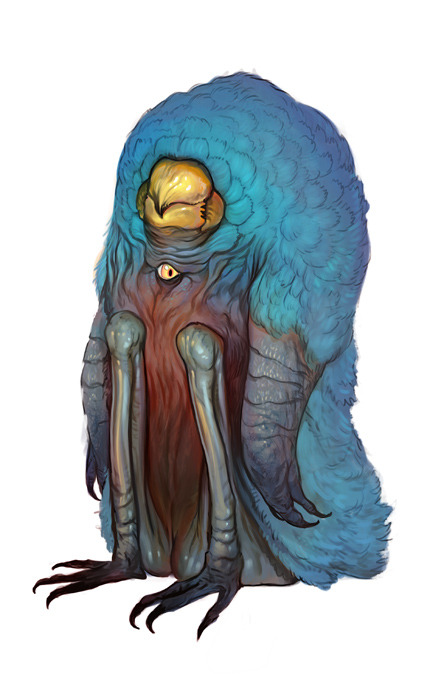
Wise Tomet
No, it's not a  Wise Tomet or any other fantastic fictional creation.
This is an animal most pre-schoolers are familiar with, although I think most people never learn how amazing it is.
Pliny the Elder wrote about it in 77 AD,  the first known instance of the legend about this animal climbing trees. These animals have been known to be impressive sports oracles, and expert escape artists, and have their own magazine.

They are octopuses (not octopi, apparently) and there are all sorts of cool tricks they can do. But the reason that I'm thinking about them today is that I just saw this article about a philosophy professor at Harvard who seems to think that each tentacle might have independent thoughts. About two-thirds of an octopus's neurons are in its arms, so it sort of makes sense. Defining and testing intelligence is always really tricky, even in humans. No one seems to have come up with a reliable way to evaluate it yet in animals that think so differently from the way we do. Designing meaningful experiments can be really hard, especially when your test subject could easily be mistaken for either a space alien, rock, or modern art.

Non-Rotting Hamburgers

Learning to design an experiment is one of the most important skills for a scientist. Beginning with middle school science projects, we constantly try to teach people to think about science in terms of framing meaningful questions and figuring out ways to answer them.


 The first time I saw this experiment, I thought it was an interesting research question: How long does it take for a Mickey D's burger to go bad? Answer: indefinitely. A hamburger left on a shelf will not go bad, it will last for more than a year with no major changes. As documented in numerous reports, it's a reproducible, falsifiable question that wasn't completely obvious. This idea fits in with our notions about the evils of processed  and industrialized food in America. Great experiment right? 

 Wrong. The implicit assumption here is that mass produced industrialized food goes bad AND that "real" food doesn't. At Serious Eats, someone finally did the control experiment, complete with photographic documentation and graphs. Turns out fresh, all natural ground beef burgers don't go bad sitting on a shelf, either. There's not enough moisture for decomposing microbes to flourish. Put either a McDonald's burger or a homemade burger in a bag and it will soon be a disgusting, rotted mess. As Kenji Lopez-Alt points out, there may be plenty of reasons to dislike McDonald's. Resorting to bad science shouldn't be one of them.

20101014-aging-burger-4.jpg
A variety of non-rotting burgers.