I'm mildly dyslexic, and spell check is my friend. So I'm very grateful to azmanam (a blogger and an organic chemistry professor at a liberal arts university) for creating the Chemical Dictionary. It's an add-in file for Microsoft Word (or OpenOffice) that adds 104,662 words to your spell checker.
Thus, the autocorrect feature will stop trying to change your UV absorbance into an absorbency, and phenolphthalein will only have the wavy red underline when you type it incorrectly. Spell check actually becomes useful for chemistry papers. J Chem Ed had a brief article on this resource, so I think a lot more people are becoming aware of this resource.
One of the really great things about this is that its constructed by scientists for scientists. The earlier version allowed users to suggest new additions, so a lot of people from various fields contributed to the current dictionary. This really has made typing up chemistry papers much easier.
Chem4Word
Microsoft actually did something I whole-heartedly like. Partnering with a group at the University of Cambridge, they're made Chem4Word a Word add-in for chemists. You know how there are "ribbons" for Home, Insert, View, etc at the top of Word 2007 and Word 2010? If you install this file, it adds a Chemistry ribbon that converts names to formulas to 2-D structures with a single button click.
The program only comes with 8 default molecules but can add anything in their IUPAC name parsing program (opsin). So it will find ethylenediaminetetraacetic aci
Once you've got the molecule, you can modify charges, rotate the structure, add isotopic labels etc. It's not nearly as sophisticated as ChemDraw, but it's not trying to be. It is a quick and easy way of inserting 2-D structures, names and formulas into a Word document. See an advertising video here.
.

Chem Spider
ChemSpider is a project of the Royal Society of Chemistry (the older, British cousin of ACS) that provides free access to information about over 25 million chemicals. Need to know what BHT stands for, or the boiling point of dimethyl sulfoxide? ChemSpider provides this and lots more: 2- and 3-D structure images, some spectra, references from the literature, safety information, etc. It also has a synthetic section that provides lab suggestions / tips / warnings often missing for primary literature. There's no registration required to use it, and it links to all sorts of reliable sources for safety, physical properties, synthesis and toxicology.
Non-cancer terminology
I just saw a fascinating article
about reducing cancer linguistically at the blog PatientPOV. At the NationalInstitutes of Health Consensus Development meeting earlier this month, a panel of
doctors and researchers came up with this very unusual suggestion.
The panel was investigating prostate
cancer. This condition is prevalent in the U.S., and today more than 2.5
million American men are prostate cancer survivors. But it is often a slow-growing
cancer that doesn’t develop any symptoms. Not that it’s completely harmless - the
severe form of prostate cancer is horrible and will likely kill 33,000 men this
year. But most (approximately 70%) diagnoses are for the low-grade form. There
is no difference between the longevity of men with no prostate cancer at all
and the longevity of those with low-grade cancer. Yet 90% of men who are told
they have prostate cancer seek aggressive treatment, which is painful and often
causes incontinence and impotence.
The panel was discussing two
different, less harsh treatment strategies called “active surveillance” and
“watchful waiting”. Active surveillance means not treating the condition, but
scheduling frequent exams and biopsies to monitor the situation. Watchful
waiting entails educating men about possible symptoms and then just waiting for
those symptoms to appear before pursuing treatment. The panel’s goal was to determine
if and/or how these techniques should be encouraged as treatment options.
Upon reviewing all the data we have
now, the panel concluded that these observational approaches are underutilized.
They made many recommendations that are quite common from these sorts of panels:
we need to develop better diagnostic tests to distinguish the risky cancer from
the not-so-harmful cancer, we should educate doctors so that they have the best
information to give patients, and (especially) someone should fund lots more
research into different aspects of this problem. On that note, a large study on
active surveillance and diet recently began accepting patients at 12 different
sites here in Georgia. But in addition to these traditional approaches, the
panel also came up with one really unique idea:
Stop calling the low-risk form of the disease cancer.
Instead of telling men with low
(under 10 ng/mL) levels of the protein PSA and borderline biopsy results (Gleason
scores of 6 or less) that they have
prostate cancer, the panel recommended that doctors avoid the emotionally
charged word. While the panel did not suggest a replacement term, wording such
as “prostate alert” or “idle tumor” has been proposed.
This seems like a reasonable idea
to me. I’m not exactly an average patient. I’m a professional scientist who can
pronounce things like dehydroepiandroesterone and androstenedione. I understand statistical analysis and I read medical
journals. And I still find the word “cancer” to be powerfully intimidating. I
think the stress of hearing “you have cancer” would force me to act, and it
wouldn’t really matter if the action was logical or in my long-term best
interest. I would want to actively fight cancer.
But if a doctor told me something
along the lines of “You have some abnormal cells. Right now, they’re not
hurting you, but some day they might turn into cancer” I’d be far less anxious
and more likely to consider all my options. I know that technically cancer is
abnormal cells, but that phrasing just does not provoke the same visceral
response.
This recommendation is not drawing
any attention right now, but it seems like it should. It’s a very simple way to
clarify risk and help patients understand their options. Sure, it could be hard to implement a cultural change like this. But not that long ago, people didn't talk about cancer. Now we've managed to raise billions of dollars and taken over an entire color for cancer awareness. I don't think adjusting terminology is so daunting that we should just ignore experts' advice.
Newest element names
IUPAC announced the names for the next two elements yesterday, flerovium and livermorium.
Flerovium (Fl) is the proposed name for element 114, which was discovered in 1999 by researchers at Flerov Laboratory in Dubna, Russia. This is the same place element 105 (Dubnium) is named after. The 12 year gap between finding and naming a new element isn't surprising. Because there have been many instances of people thinking they've found a new element when they haven't, it takes a long time for a new discovery to be adequately checked. There's still about a 5 month consideration period before the new names are finalized. I think it would be better to use Fv as the abbreviation than Fl because of fluorine, but confusing general chemistry students isn't high up the list of concerns for IUPAC.
Livermorium (Lv) element 116's discovery was also reported by that same Russian group, but is named after Lawrence Livermore National Lab in California.. Originally, they proposed naming it Moscovium, since Dubna is located in the oblast of Moscow. However, IUPAC pointed out that it was the collaboration between the Russians and the Americans that allowed the discoveries to be made, so naming one after each place is more politically correct. Americium, Californium, Berkelium and Lawrencium are all named after the work done here. Don't go trying to updating the Elements Song just yet, 113, 115 and 117 have all been reported and will probably get names within a few years.
College Grads and Jobs
Many people enroll in college thinking a degree will make them instantly employable. This is obviously not true.
Take a glimpse at any page of the Occupy Wall Street gallery and you're sure to find numerous examples of people who built up ruinous debt but can't find work. The Great Recession certainly hasn't helped in the US, but this is a problem universities have been talking about for decades.
Take China, for example. China has survived the global economic crisis virtually unscathed. In 2010, their economy grew by 10%. Yet ~30% of their recent college graduates don't find jobs, and thousands of those employed live in highly educated slums. China recent announced a new strategy for dealing with this problem. They are going to eliminate college majors with low employment rates. We don't know which majors yet but in a manufacturing-based economy, finance, management and statistics will probably fare better than poetry, history, or theoretical math.
As a liberal arts professor, I'm ambivalent about this. Part of me wants to say that higher education is (and should be) idealistic, with the goal of producing citizens who will think in new ways and be prepared for challenges undreamt. And part of me realizes that encouraging students to take on $160,000 in debt to prepare for a career in social work (salary ~$30 k/year) is not demonstrating good critical thinking. And the fact of the matter is that some major always has the be the easiest, and a huge number of college students chose majors based on least resistance rather than aptitude or passion. Eliminating a major won't help these people find jobs. Instead, it will be more useful to provide students with means to demonstrate skills employers want, facilitate internships and co-op opportunities, and require a strong work ethic in every class.
Bad science, sweet results
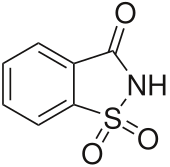 Constantin Fahlberg was a really lucky chemist. One day in 1878, he left his lab and went to directly dinner without washing his hands and discovered that his dinner was really sweet, including his napkin. In his words
"It flashed on me that I was the cause of the singular universal sweetness, and I accordingly tasted the end of my thumb, and found it surpassed any confectionery I had ever eaten. I saw the whole thing at once. I had discovered some coal tar substance which out-sugared sugar. I dropped my dinner, and ran back to the laboratory. There, in my excitement, I tasted the contents of every beaker and evaporating dish on the table."
Poor lab hygiene and reckless endangerment led to the discovery of saccharin, and a company that made a fortune putting the sweetener into sodas without telling anyone. When public outcry over food quality resulted in regulation, Teddy Roosevelt kept saccharin on the approved list because of his own dieting experience with the substance. It took almost 100 years before science decided that he has right, there is no indication that saccharine is unsafe. In light of obesity and diabetes rates today, it's ironic to read about how NOT having sugar in food was thought to be unhealthy. Maybe 100 years from now, someone will think that subsidizing pizza and fries in school lunches was actually reasonable.
Subscribe to:
Posts (Atom)